
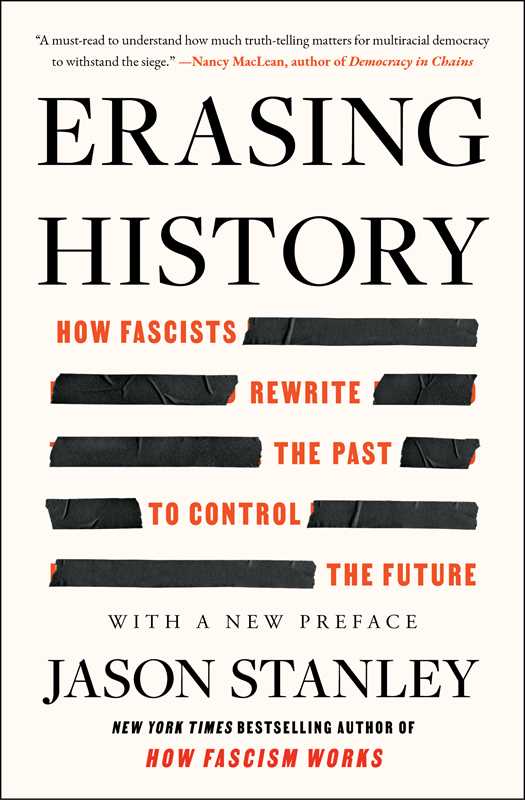



Why History Matters
History isn’t simply a record of what happened. It shapes how we understand the present and what we believe is possible in the future.
In Erasing History: How Fascists Rewrite the Past to Control the Future, philosopher Jason Stanley examines the political struggle over history, education, and collective memory. He argues that authoritarian movements seek to reshape how societies understand their past because controlling that narrative can make it easier to challenge democratic institutions and undo social progress.
Drawing on political philosophy and historical examples, Stanley explores the ways authoritarian movements attack education, discourage critical examination of national traditions, and promote versions of history designed to reinforce existing hierarchies.
What Does It Mean to Erase History?
Stanley examines several interconnected issues, including:
- Attempts to control what students learn about history
- Attacks on schools and universities
- The political use of historical narratives
- The relationship between nationalism and authoritarianism
- Efforts to undermine critical inquiry
- The role of education in maintaining democratic societies
- How historical memory can influence political movements
- The connection between propaganda, ideology, and political power
Rather than treating history as something safely confined to the past, Erasing History argues that battles over historical memory are also battles over the kind of society we want to build.
An Important Read for Curious, Critical Thinkers
For readers interested in history, politics, philosophy, authoritarianism, education, or the defense of democratic institutions, Erasing History provides a thought-provoking examination of why the stories societies tell about their past matter so much.
It is also a natural companion to books such as Stanley’s How Fascism Works and other Rational Supply Co. titles examining religion, skepticism, critical thinking, and the forces that shape what people believe.
About the Author
Jason Stanley is a philosopher and author whose work focuses on authoritarianism, democracy, propaganda, and political philosophy. He is the author of How Fascism Works and How Propaganda Works, among other books. His writing on authoritarianism and democracy has appeared in publications including The New York Times, The Guardian, and The Washington Post.










Reviews
There are no reviews yet.