
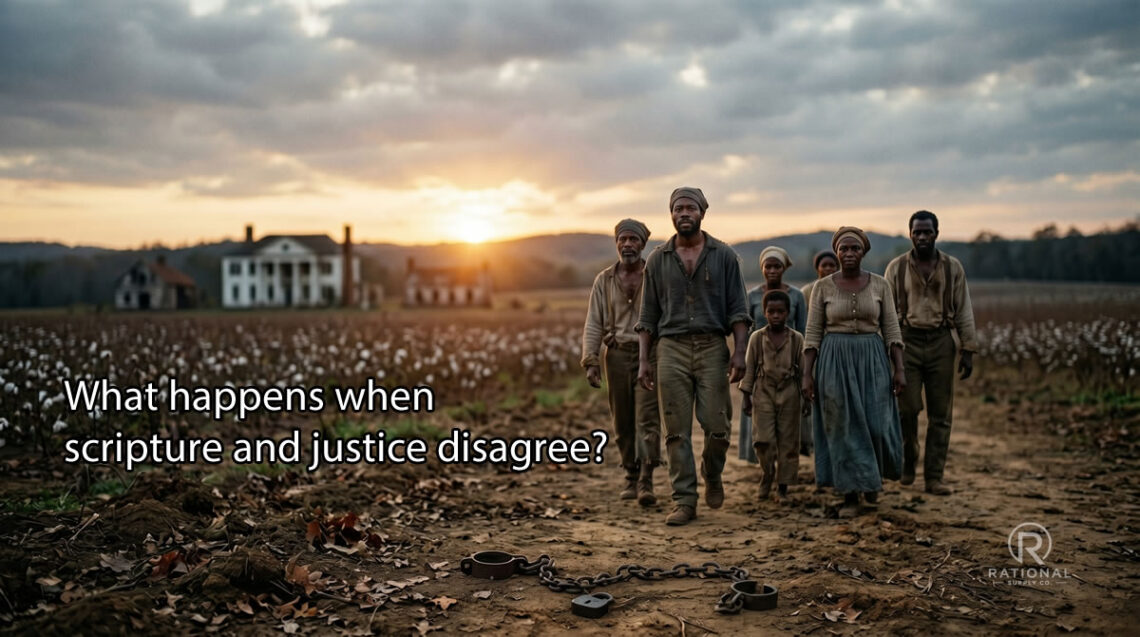
For most of Western history, if you wanted to challenge slavery, the subordination of women, or racial segregation, you had a problem before you even got to your argument: scripture was already on the other side.
This isn’t a fringe claim or an anti-religious talking point. It’s well-documented history. Slaveholders, segregationists, and opponents of women’s rights didn’t have to twist the Bible into a pretzel to find support for their positions — in many cases, they could simply read it.
What’s less often discussed is what actually won these arguments in the end. It wasn’t a better interpretation of the same texts. It was the emergence of a different kind of argument entirely — one based on reason, natural rights, and the idea that human beings have inherent dignity regardless of what any text says about them. That argument has a name: secular humanism. And its fingerprints are all over the moral progress of the last 250 years.
What the Bible Actually Says About Slavery
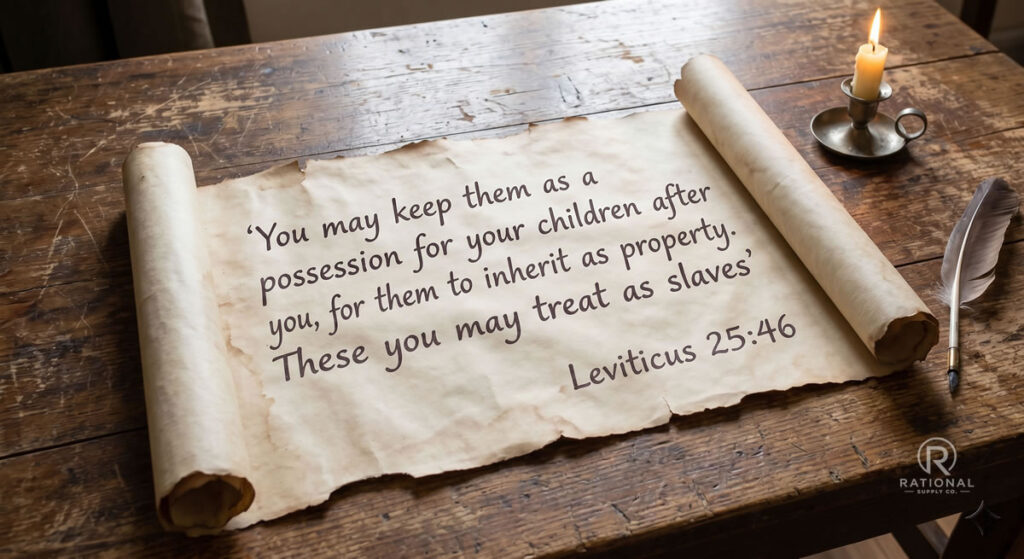
This is worth being specific about, because the vagueness is part of how the argument survived for so long.
The Bible does not condemn slavery as an institution. Not in the Old Testament, and not in the New. Leviticus contains detailed rules for how Israelites may own slaves from other nations. Exodus regulates how long-term slaves may be treated, including provisions for permanently injuring a slave without major consequence in certain circumstances. The Ten Commandments list a neighbor’s slaves among his property, alongside his house and his ox.
The New Testament doesn’t reverse this. Paul’s letters instruct slaves to obey their masters “with fear and trembling,” and instruct masters to treat slaves well — but never to free them. The Book of Philemon, one of Paul’s shortest letters, is literally a letter sent along with a runaway slave being returned to his owner.
American defenders of slavery used this material extensively and explicitly. Pro-slavery theologians pointed to the so-called “Curse of Ham” — a passage in Genesis where Noah’s son Ham is cursed, later (and inaccurately) read by pro-slavery writers as a divine justification for the enslavement of Black people specifically. Southern seminaries produced entire theological defenses of slavery built on these foundations. To many slaveholders, the question of whether slavery was compatible with Christianity wasn’t even controversial — the text seemed to settle it.
The Abolitionist Problem
This put abolitionists — including deeply religious ones — in a difficult position. If your opponent can open the same book you’re holding and point to verses that appear to support their position, “the Bible says so” stops being a winning argument for either side.
Some abolitionists responded by reinterpreting scripture — emphasizing themes of liberation, the Exodus story, and the moral teachings of Jesus over the legal codes of Leviticus. This was a legitimate and often powerful approach, and many religious abolitionists, particularly Quakers, were morally serious and historically important.
But a second kind of argument was also emerging — one that didn’t depend on which reading of scripture won. It came from the Enlightenment: the idea that human beings possess natural rights simply by virtue of being human, independent of any divine text. Reason itself, applied honestly, could recognize that enslaving another person was wrong — regardless of what any ancient legal code said about it.
Frederick Douglass, born into slavery and later one of the most powerful voices against it, captured this tension directly. In his writing, he drew a sharp distinction between what he called the “slaveholding religion” of the American South — which he described as morally corrupt — and what he saw as the true ethical core of Christianity, which he argued the South had betrayed. Douglass’s argument worked because it appealed to something beyond the text itself: a moral standard that the text could be judged against, and found wanting.
That move — judging scripture by an external standard of human dignity, rather than treating scripture as the final word — is, at its core, a secular humanist move. You don’t need to be irreligious to make it. But the standard itself doesn’t come from the book. It comes from reason.
The Same Pattern, Repeated: Women’s Suffrage
A generation later, the same dynamic played out over women’s right to vote.
Opponents of suffrage had scripture on their side too. Paul’s letters instruct wives to submit to their husbands and women to remain silent in church. Genesis describes Eve’s creation from Adam’s rib and her punishment after the Fall — passages that were cited for centuries as evidence of women’s subordinate place in the divine order.
Elizabeth Cady Stanton, one of the most important leaders of the American suffrage movement, recognized this problem explicitly. In 1895, she published The Woman’s Bible — a direct critique of the scriptural passages used to justify women’s inequality. The book was controversial even among suffragists; many worried it would alienate religious supporters of the movement. But Stanton’s underlying argument was the same one Douglass had made about slavery: if a text’s plain meaning supports injustice, the text doesn’t get the final word. Human dignity does.
This is also where the suffrage movement’s secular and religious wings diverged most clearly. Some suffragists argued for the vote in explicitly Christian terms — framing women’s moral influence as a religious duty. Others, like Stanton, made the case in the language of natural rights and human equality — the same Enlightenment framework that had been used against slavery a generation earlier.
Civil Rights: The Curse of Ham, Again
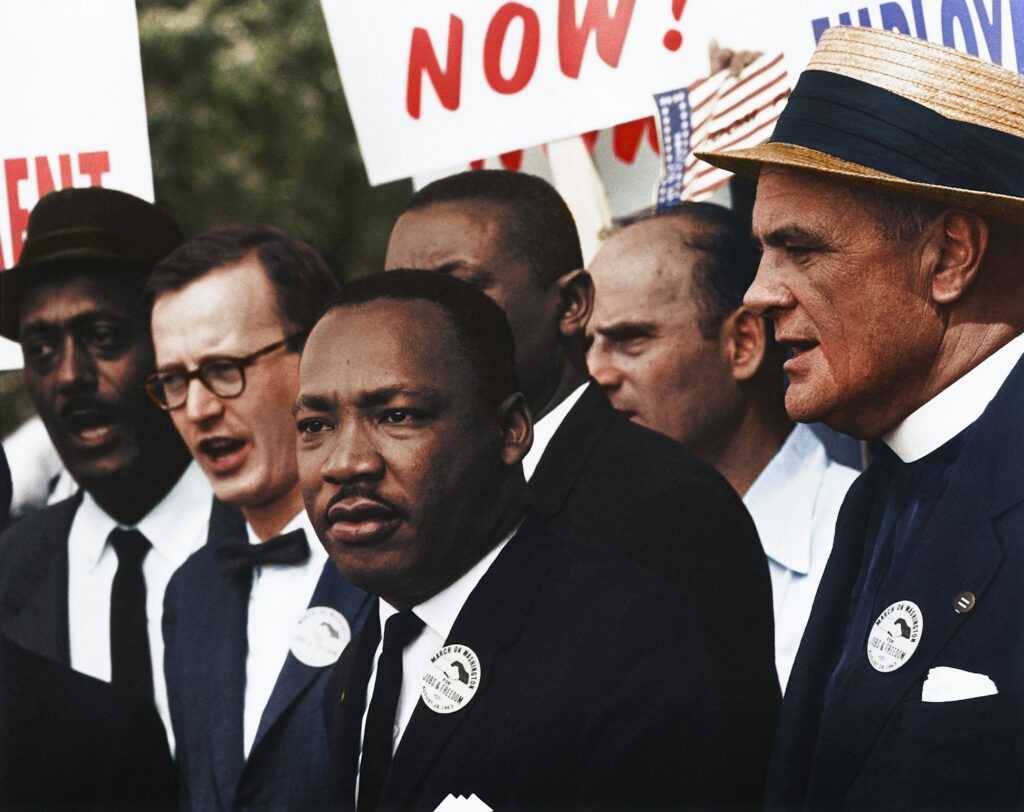
By the mid-20th century, segregationists were reaching for many of the same arguments slaveholders had used a century before — including, once again, the Curse of Ham. Prominent segregationist religious leaders argued that racial separation was divinely ordained, citing the same passage that had been used to defend slavery, now repurposed to defend Jim Crow.
The Civil Rights Movement is often remembered — accurately — as deeply rooted in Black churches and religious leadership. Martin Luther King Jr. was a Baptist minister, and the movement’s language was saturated with religious imagery and moral appeals.
But the legal and political victories of the movement were won largely on secular grounds. Brown v. Board of Education (1954) was decided on the basis of the Equal Protection Clause of the Constitution — a document that, like the Declaration of Independence before it, grounds human equality in natural rights rather than scripture. The Civil Rights Act of 1964 and the Voting Rights Act of 1965 were acts of secular law, justified in the language of constitutional equality, not religious doctrine.
In other words: the moral energy of the movement often came from religious communities, but the argument that ultimately had to win — in courtrooms, in Congress, against opponents who also claimed scripture on their side — was the secular one. Equal protection under the law doesn’t depend on resolving a theological dispute about Noah’s sons.
The Common Thread
None of this is an argument that religious people were on the wrong side of these struggles, or that secular people were uniquely on the right one. The historical reality is more complicated than that, and many religious individuals and communities were essential to all three movements.
But there is a pattern worth noticing. In each case, the side defending an unjust status quo could point to scripture and find real support there — not a strained misreading, but a plain one. And in each case, the argument that ultimately proved decisive was one that didn’t depend on resolving that dispute: an appeal to a standard of human dignity and equality that exists independent of any sacred text, and against which even sacred texts can be judged.
That standard — reason-based, universal, and grounded in our shared humanity rather than revelation — is the central commitment of secular humanism. It’s not a coincidence that it shows up at every one of these turning points. It’s one of the most useful tools human beings have ever developed for recognizing injustice that’s been hiding in plain sight, sanctified by tradition, for a very long time.
It’s also a tool we still need. The same scriptural passages cited to defend slavery and segregation are still cited today in debates over LGBTQ rights and equality. The pattern hasn’t disappeared. Neither has the argument that answers it.
Rational Supply Co. makes clothing and gifts for people who believe human dignity doesn’t need a citation. Browse our collection for freethinkers, skeptics, and secular humanists.